Chairman's Statement
Climate change is one of the biggest threats facing humanity and we are already experiencing its effects. Globally, temperatures have continued to reach new heights, fuelling extreme weather events across the world. This includes increasingly severe and prolonged droughts, more frequent and intense heat waves, and longer and wider burning wildfires. Closer to home, Singapore was hit by record-breaking temperatures in 2023, with the highest daily maximum temperature of 37.0 degrees Celsius recorded on 13 May 2023. The Meteorological Service Singapore expects that temperatures in 2024 will be even higher.
Climate change has profound implications on our economy. The financial sector is exposed to this through its financing, insurance, and investment activities, and financial institutions need to mitigate physical and transition risks arising from climate change. Nonetheless, there are also significant opportunities for financial institutions based in Singapore to support a credible and smooth transition to net zero in Asia. This could be through the channeling of capital to green and transition technologies, as well as the fostering of innovative financing solutions to build a sustainable future.
MAS has progressively been integrating environmental, including climate change, considerations into every aspect of its work since 2019.
- As central bank and financial regulator, MAS works with financial institutions to strengthen Singapore financial sector’s resilience to environmental risks.
- As promoter of Singapore as an international financial centre, MAS works with financial institutions to develop a vibrant green and sustainable finance ecosystem to support Asia’s transition to a low-carbon future.
- As the guardian of Singapore’s official foreign reserves, MAS is including climate change risks and opportunities considerations into its investment framework.
- As an organisation, MAS is reducing its own carbon and environmental footprint to support Singapore’s broader climate commitments.
MAS has forged ahead with the Finance for Net Zero (FiNZ) Action Plan, which sets out its strategies to mobilise financing to catalyse Asia’s net zero transition and decarbonisation activities in Singapore and the region.
- To foster green solutions, MAS is convening industry partnerships such as the Transition Credits Coalition (TRACTION) that is pioneering a new financing mechanism to accelerate energy transition through transition credits, and supporting the financing of marginally bankable green projects through Financing Asia's Transition - Partnership (FAST-P).
- To support credible transition plans, MAS has provided clarity on green and transition activities through the launch of the Singapore-Asia Taxonomy for Sustainable Finance. In addition, MAS is strengthening supervisory guidance to financial institutions by consulting on a set of Guidelines for Transition Planning in October 2023. MAS has also published the voluntary Singapore Code of Conduct for ESG rating and data product providers in December 2023.
- To facilitate availability of good climate-related data and information, MAS has been working with the Singapore Exchange to implement, for listed companies, disclosures requirements that are aligned to standards issued by the International Sustainability Standards Board (ISSB). The launch of Gprnt, an integrated digital platform, will simplify ESG reporting by enabling businesses to leverage on technology to automatically convert their economic data into sustainability-related information.
MAS has implemented measures to protect the official foreign reserves portfolio from climate risks by managing portfolio exposures to companies with high transition risks as the world pivots away from its reliance on fossil fuels, influence positive change through its investments with external fund managers, and generate good long-term investment returns from climate transition opportunities and low carbon solutions. MAS believes that the effective implementation of these measures, together with real world progress to decarbonise the global economy, will lead to a decline in the average level of carbon intensity for the equities investments in the portfolio by up to 50% by 2030 (compared to base year FY2018).
Finally, MAS continues to make progress in reducing its corporate carbon emissions and remains steadfast in its commitment to lowering the carbon footprint across its physical operations, including its outsourced currency operations. MAS has also made efforts in greening its buildings by installing energy efficient light fittings, solar panels, EV charging points and retrofitting an ageing chilled water plant.
On behalf of the Board, I thank all our stakeholders for your unwavering commitment to support the financial sector in its ongoing efforts to contribute towards a climate resilient and environmentally sustainable world.

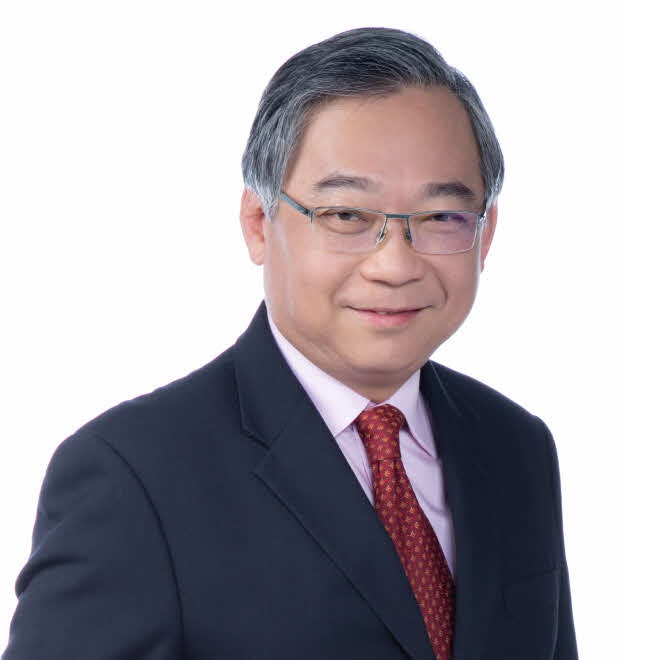
Gan Kim Yong
Chairman